
Firefighter Training Equipment
Move Beyond Manual Belay
Reduce human error, run more evolutions, and train at
full height with automatic controlled descent built for
firefighter training.
Modern firefighter training equipment
Firefighter training often includes at-height drills such as window bailouts, ladder bailouts, and elevated victim removal. These evolutions require equipment that supports realistic, repeatable training.
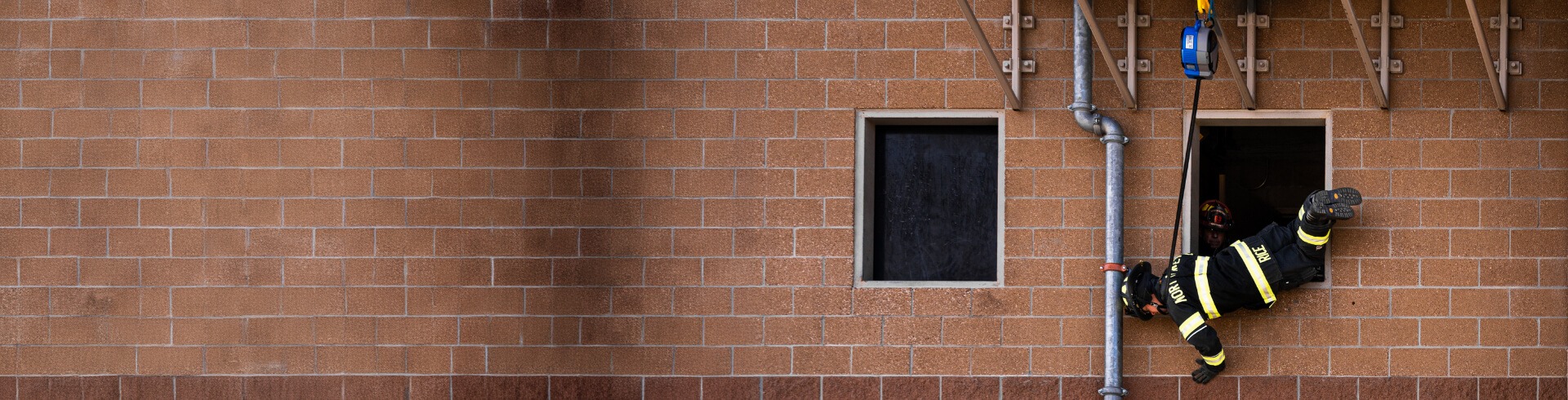
Automatic belay systems such as TruBlue SafeLine help departments run full-height evolutions with controlled descent and consistent slack management, allowing instructors to focus more on the firefighter and less on manual belay management.
The limits of manual belay in firefighter training
Many fire departments still rely on manual belays or padding below training props during elevated drills. While familiar, these approaches can introduce limitations during firefighter training evolutions.

Belay quality can vary from one belayer to the next.
Focus shifts between rope management and trainee performance.

Extra setup and reset time can reduce repetitions per session.

Too much slack is risky. Too little can make drills feel less realistic.

Dedicated personnel needed to manage belaying.
As training programs evolve, many departments are looking for solutions that improve safety, consistency, and training efficiency.
Automatic belay for firefighter training
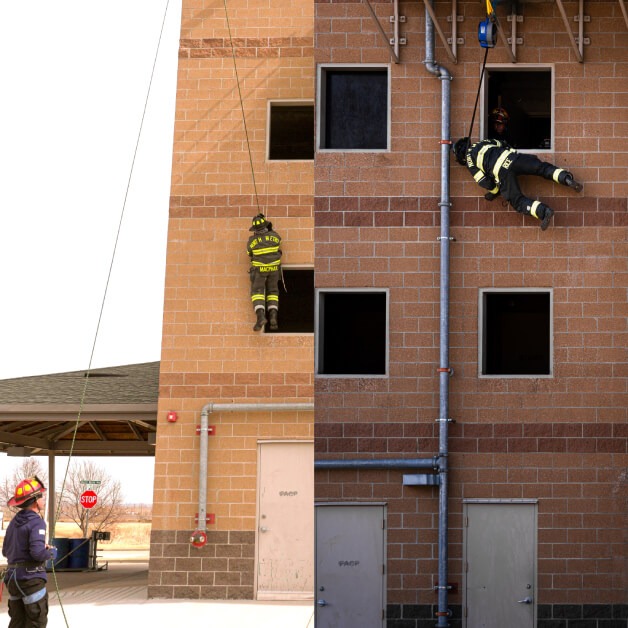
TruBlue SafeLine is a controlled descent system designed specifically for firefighter training.
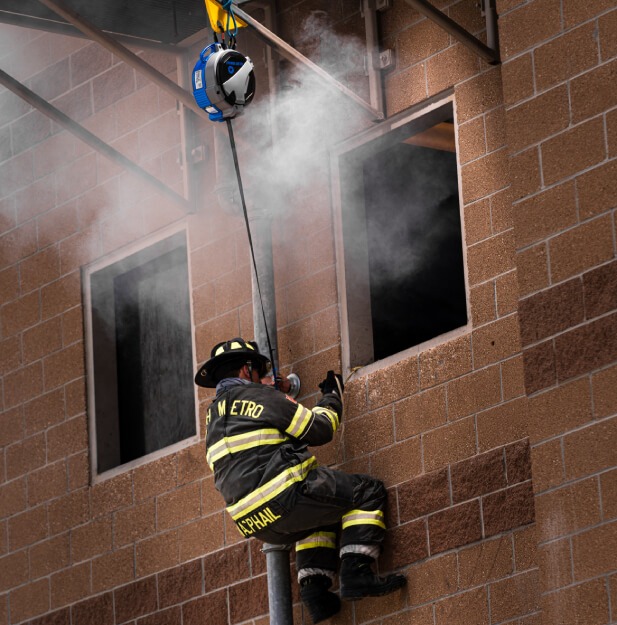
Used as an automatic belay, SafeLine replaces manual belays and padding while maintaining consistent slack management and smooth, predictable lowering during elevated training evolutions.
This allows departments to conduct safer, more efficient, and more realistic firefighter training.
Why fire departments are moving beyond manual belay
Reduce Human Error in Training Evolutions
Automate belay management to reduce variability in technique and help create more consistent training conditions.
Run More Training Evolutions per Session
Eliminate the need for a dedicated belayer and speed up reset between drills so more firefighters can train in less time.
Build Firefighter Confidence
Repeatable, realistic training helps firefighters build the confidence and composure they need when the moment is real.
Train Under More Realistic Conditions
Support at-height evolutions with consistent tension and slack management that allows more natural movement during drills.
Firefighter training applications
SafeLine supports a wide range of firefighter training evolutions and training props used by fire departments.
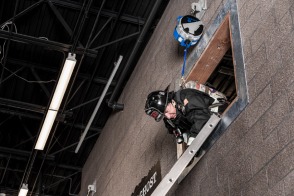
Window Bailout Training
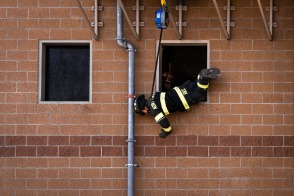
Practice emergency window escape scenarios while allowing firefighters to feel their own descent control device engage.
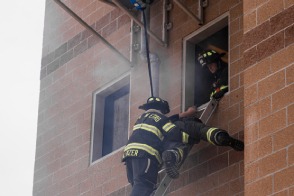
Ladder Bailout Training
Train firefighters to safely exit upper-story windows using ladders.
At-Height Victim Removal
Train firefighters to safely lower a victim during elevated rescue scenarios.
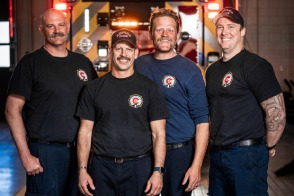
Recruit Evaluations
Provide repeatable training scenarios for firefighter assessment and recruit evaluation.
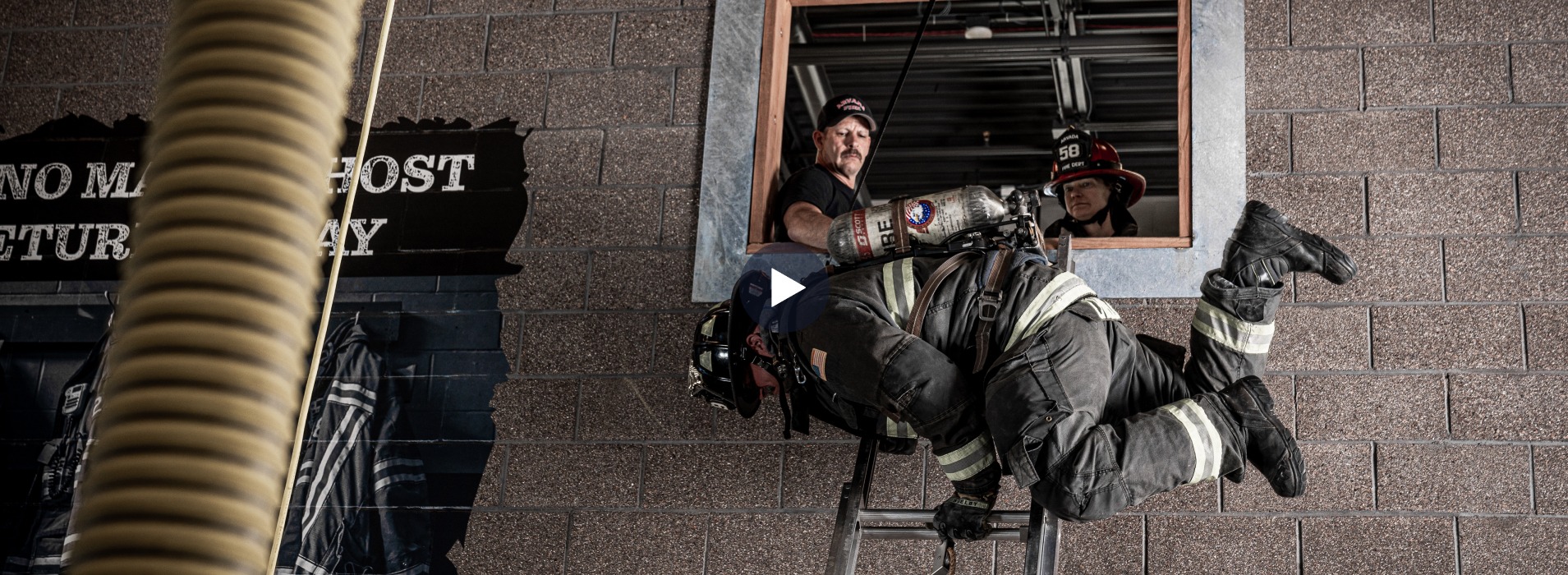
See SafeLine in firefighter training
Fire departments are incorporating automatic belay systems into training towers to support window bailouts, ladder bailouts, and elevated rescue scenarios. SafeLine helps instructors run repeatable training evolutions while providing controlled descent and reducing reliance on manual belays.
Manual belay vs automatic belay systems
How SafeLine differs from Self-Retracting Lifelines (SRLs)
SafeLine may resemble a self-retracting lifeline, but the systems function differently.
SRLs are designed to arrest a fall abruptly and are typically used for occupational fall protection.
SafeLine instead delivers smooth, controlled lowering designed specifically for firefighter training.
This allows firefighters to perform realistic training evolutions without nuisance lockups or abrupt stopping behavior.
Quick Distinction
SRLs are built to arrest a fall. SafeLine is built to manage descent smoothly during training.
Why fire departments choose SafeLine

Replaces manual belays to help reduce human error
Enables more repetitions per training session
Supports at-height training drills with a reliable backup
Maintains consistent tension and automatically manages slack
Patented magnetic braking technology delivers predictable descent
ANSI Z359.9 certified for Personal Equipment for Protection Against Falls
With roots in climbing safety, more than 60,000 TruBlue devices safeguard millions worldwide.
Trusted by fire departments and training academies everywhere
With TruBlue SafeLine, there were two things that stood out compared to how we trained before: safety and efficiency.

Now that I've trained with the SafeLine, I'll never train without it.
TruBlue eliminates the need to manually belay the rescuer or victim and gives firefighters piece of mind while repelling out of windows.
Safety standards
-
ANSI Z359.9
-
EN 341: 2011
-
EN 360:2002
-
RFU PPE-R/11.128:2019
-
NFPA 2500 Chapters 24-28 (NFPA 1983)
-
ANSI Z359.14
-
CSA Z259.2.2
-
CSA Z259.2.3
-
AS/NZS 1891.3
* Not certified. For comparison only.
Firefighter training equipment FAQs
What equipment is used for firefighter training?
Firefighter training equipment includes training props, rope systems, and controlled descent devices used during drills such as ladder bailouts, window bailouts, and rope rescue training.
Automated belay systems like SafeLine provide controlled lowering and consistent slack management during elevated training evolutions.
What is an automated belay system for firefighter training?
An automated belay system uses a controlled descent device to manage rope tension and lowering during firefighter training drills.
Unlike manual belays, the system automatically manages slack and descent speed, helping departments reduce human error while allowing instructors to focus on trainee performance.
Can firefighters still use their descent control device during training?
Yes. During window bailout training, SafeLine maintains realistic tension and slack management so firefighters can feel their own descent control device engage and manage their descent.
Does SafeLine require a dedicated belayer?
No. SafeLine automates descent control and slack management, eliminating the need for a dedicated belayer during training evolutions.
Can SafeLine be used for at-height firefighter training drills?
Yes. SafeLine supports at-height evolutions while providing smooth, predictable lowering during ladder bailout training, window bailout training, and elevated rescue drills.
Is SafeLine the same as a self-retracting lifeline (SRL)?
No. SRLs are designed to arrest a fall abruptly, while SafeLine is engineered for smooth, controlled lowering during training evolutions.
This allows firefighters to perform realistic training scenarios without nuisance lockups.
What firefighter training props work best in training towers?
Training towers benefit from equipment that allows repeatable evolutions, controlled descent, and minimal reset time.
Automated belay systems help departments run more training evolutions while maintaining consistent descent management.
What is included in a firefighter bailout kit?
Yes. During window bailout training, SafeLine maintains A firefighter bailout kit typically includes a harness or escape belt, rope or webbing, a descender or rappelling device, carabiners, and other hardware needed for emergency escape from height. Specific components can vary by department and training approach. During training, departments may also use automated belay or controlled descent systems like SafeLine as a backup system to support more repeatable, controlled bailout evolutions.
What equipment is used in firefighter training towers?
Firefighter training towers commonly use ladders, anchors, bailout props, rappelling setups, hose advancement areas, stair systems, and rescue props designed to simulate elevated fireground scenarios. Many towers also incorporate window bailout stations, victim removal setups, and other drill-specific training features.
For at-height evolutions, departments may add descent control equipment or automated belay systems to support safer, more repeatable training. These systems can help instructors run full-height drills with controlled lowering while reducing reliance on manual belays.
What are common firefighter training props?
Firefighter training props are structures and equipment designed to simulate real-world fireground scenarios. Common examples include burn cells for live-fire training, forcible entry props, stair towers, rappelling anchors, and elevated bailout props used for ladder or window escape drills.
Some training props involve working at height, such as training towers, window bailout stations, and elevated victim removal scenarios. In these environments, departments often use descent control equipment or automated belay systems to allow firefighters to perform drills repeatedly while maintaining a controlled training environment.
Can SafeLine be used for rope rescue training?
SafeLine does not replace the rope systems used in technical rope rescue training. Rope rescue evolutions typically involve specialized rescue hardware and system setups that firefighters must learn to operate directly.
However, many departments incorporate SafeLine into training towers or elevated rescue drills as a backup safety system. This allows firefighters to practice movement and rescue scenarios at height while maintaining controlled descent and reducing reliance on manual belays.
How can fire departments improve safety during firefighter training?
Fire departments can improve training safety by standardizing equipment, reducing variability in training setups, and using systems that support consistent, predictable descent during at-height drills. Automated descent systems can help reduce reliance on manual belay technique while supporting more controlled firefighter training evolutions.
Upgrade Your Firefighter Training Program
Move beyond manual belay and improve the safety, efficiency, and realism of firefighter training.