

Lineworker Training Equipment
Train Lineworkers with Controlled Descent
Add a reliable secondary safety layer and build trainee
confidence with controlled descent designed for pole
climbing training.
Modern lineworker training equipment
Lineworker training programs rely on realistic pole climbing instruction to prepare apprentices for work at height on electrical distribution systems.
Training typically uses climbing spurs, positioning straps, and fall restriction devices, with some programs also using SRLs as a secondary backup during instruction. While these systems support field safety, they are not designed for repeated training evolutions and can introduce nuisance lockups or inconsistent descent behavior.
Controlled descent systems such as TruBlue SafeLine add a training-specific safety layer, allowing trainees to climb naturally while supporting smooth, predictable lowering during instruction.
The limits of traditional lineworker training systems
Most lineworker training programs rely on standard climbing equipment and instructor oversight during pole climbing instruction. While familiar, these approaches can introduce limitations during training.

Traditional systems are designed for field protection, not smooth, repeatable lowering during instruction.

Many programs depend on positioning gear and instructor oversight without a true secondary safety layer.

Especially during down climbing, abrupt engagement can interrupt movement and reduce realism.

Inconsistent descent behavior and reset processes can slow drills and assessments.
As training programs evolve, many are looking for ways to improve safety, consistency, and trainee confidence without changing core climbing methods.
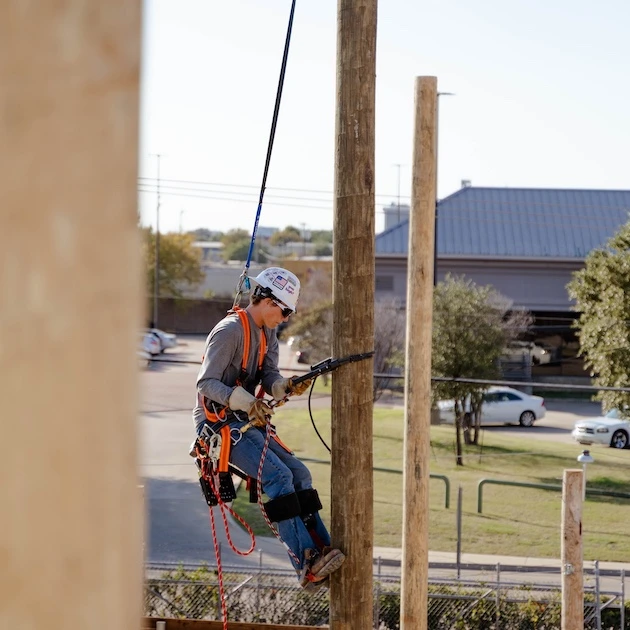
Controlled descent for lineworker training
TruBlue SafeLine is a controlled descent system built for pole climbing training.
Used as a secondary safety device, it works alongside standard climbing equipment to provide smooth, predictable lowering without disrupting natural movement.
Unlike SRLs or fall restriction systems built for field protection, SafeLine is engineered for training environments where repeatability, down-climbing, and trainee confidence matter.
This helps programs improve safety, consistency, and confidence while preserving realistic climbing technique.
Why lineworker training programs are adopting controlled descent
Add a True Secondary Safety Layer
SafeLine adds a reliable backup during training evolutions without changing core climbing methods.
Build Trainee Confidence at Height
SafeLine provides smooth, predictable descent that helps trainees become comfortable at height more quickly, supporting stronger engagement and progression.
Support Realistic Pole Climbing Training
SafeLine allows trainees to move naturally during ascent and descent while preserving realistic pole climbing technique.
Improve Training Efficiency
SafeLine delivers consistent descent behavior and minimal reset between trainees, helping instructors keep training cycles moving efficiently.
Lineworker training applications
SafeLine supports a range of pole climbing training scenarios used by utility training programs.

Pole Climbing with Proper Technique
Support realistic climbing instruction using standard field equipment.

Secondary Safety for Hurt-Man Rescue Drills
Provide a reliable backup during rescue training scenarios at height.

Down-Climbing Practice Without Lockups
Allow trainees to practice controlled descent without SRL nuisance lockups.

Apprentice Evaluations and Skills Assessments
Create consistent training conditions for evaluating climbing performance.
See SafeLine in lineworker training
Training programs are incorporating controlled descent systems into pole climbing instruction to improve safety, consistency, and trainee confidence. SafeLine allows instructors to run repeatable training evolutions while maintaining realistic climbing conditions.

SRLs vs controlled descent for lineworker training
Lineworker training typically relies on positioning systems and fall restriction devices, with some programs using SRLs, or yo-yos, as a secondary backup.
SRLs can provide fall protection, but they are designed to arrest a fall abruptly. In training, that can interfere with movement, especially during down-climbing practice.
SafeLine serves a different role. It adds controlled descent designed specifically for training, allowing natural movement with smooth, predictable lowering when activated.
Why utility training programs choose SafeLine


Adds a true secondary safety layer during training
Supports consistent, repeatable training cycles
Builds trainee confidence at height
Eliminates nuisance lockups common with SRLs
Patented magnetic braking delivers smooth, predictable descent
ANSI Z359.9 certified for Personal Equipment for Protection Against Falls
With roots in climbing safety, more than 60,000 TruBlue devices safeguard millions worldwide.
Trusted by utility training programs everywhere
TruBlue SafeLine allows the climber to develop the self-arrest skill. It forces my students to develop proper climbing techniques that will result in better, more confident climbers!

Confidence came quicker than it would have without the TruBlue SafeLine. It probably saved us days of training students to overcome their fear of heights.
Safety standards
-
ANSI Z359.9
-
EN 341: 2011
-
EN 360:2002
-
RFU PPE-R/11.128:2019
-
NFPA 2500 Chapters 24-28 (NFPA 1983)
-
ANSI Z359.14
-
CSA Z259.2.2
-
CSA Z259.2.3
-
AS/NZS 1891.3
* Not certified. For comparison only.
Lineworker training equipment FAQs
What equipment is used for lineworker training?
Lineworker training typically includes climbing spurs, positioning straps, fall restriction devices such as the BuckSqueeze, and sometimes SRLs for backup. Controlled descent systems can be added to support training.
Is SafeLine the same as an SRL?
No. SRLs are designed to arrest a fall and often lock abruptly. SafeLine provides smooth, controlled descent designed for training environments.
Does SafeLine interfere with climbing technique?
No. It allows natural movement during both ascent and descent.
Does SafeLine require changes to training programs?
No. It integrates into existing training setups without changing core methods.
How does SafeLine help trainee confidence?
By providing predictable descent and a reliable safety layer, trainees become comfortable working at height more quickly.
What is a controlled descent system in lineworker training?
A controlled descent system provides smooth, predictable lowering during training, allowing trainees to climb naturally while maintaining a reliable backup.
Can trainees still use standard climbing equipment?
Yes. SafeLine works alongside standard climbing systems and does not replace them.
Why do SRLs lock during down climbing?
SRLs are designed to stop falls, so downward movement can trigger lockup. This can interfere with training.
Can SafeLine improve training efficiency?
Yes. It supports repeatable training cycles with minimal reset between trainees.

Upgrade your lineworker training program
Add controlled descent to pole climbing training to improve safety, consistency, and trainee confidence.