
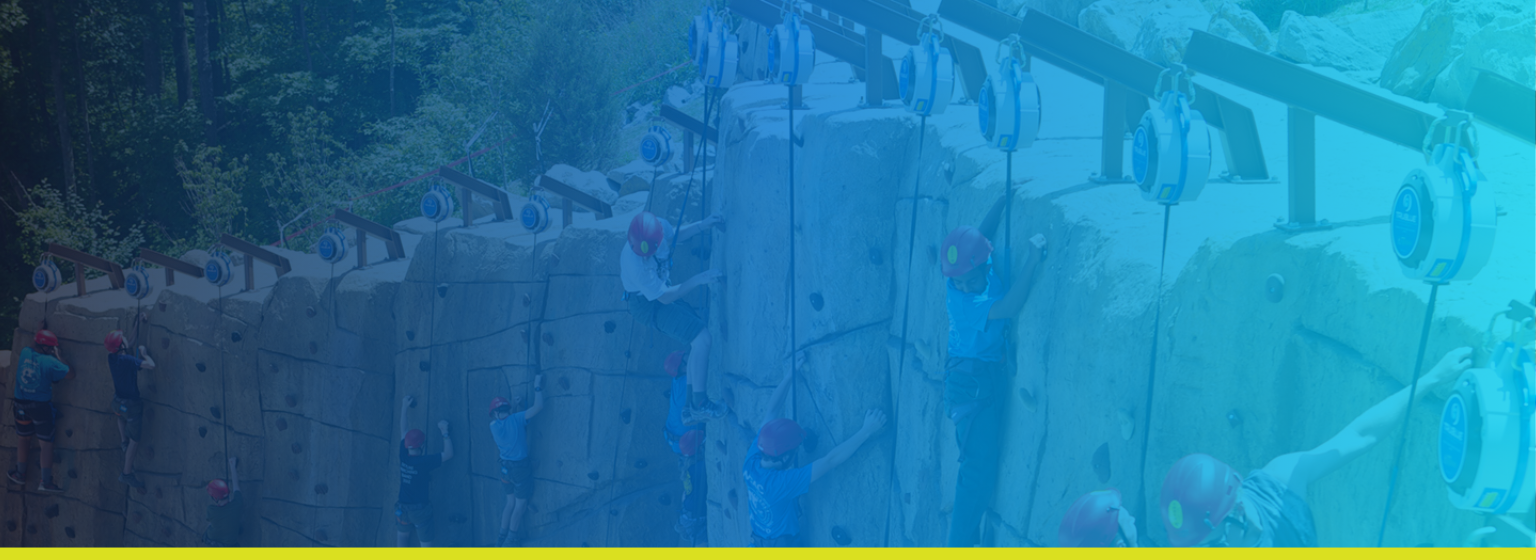
TruBlue Auto Belays are designed for use both indoors and outdoors. If you're mounting your device outside, a few simple precautions can go a long way toward keeping it protected from the elements and operating smoothly for years to come.
Assembling the best TruBlue Auto Belay for outdoor use
When selecting a TruBlue Auto Belay for an outdoor climbing wall, you'll have several device and connector options to choose from. While all of these options perform well in indoor environments, some are better suited for outdoor operation than others.
In this section, we'll walk through the available options and highlight the features to consider when building the ideal TruBlue Auto Belay system for your outdoor climbing wall.
Recommended TruBlue models for outdoor climbing walls
For most outdoor applications, unless you’re hosting a speed climbing event, your choice will come down to either the TruBlue iQ or TruBlue iQ+.
Both TruBlue iQ and iQ+ are weather-sealed against rain and other contaminates. However, even the most tightly sealed auto belay will have to deal with some internal contaminants—when the webbing retracts into the device, there's simply no avoiding it. Fortunately, every TruBlue model comes equipped with our patented magnetic braking system, immediately setting them apart from any auto belays that rely on friction-braking systems (such as brake pads).
Unlike traditional friction-based braking systems that rely on contacting components to control descent, TruBlue's magnetic braking system operates without internal brake-pad contact. As a result, performance is not dependent on friction surfaces that can wear over time or be affected by environmental conditions. When rain or dust gets inside the internal components of a TruBlue Auto Belay, the magnetic braking system continues to perform as designed.
Beyond the device itself, TruBlue iQ Series models also give you multiple options when it comes to picking the weather-resistant connector that best fits your needs (more on choosing your connectors below).
Easily replace worn out external parts
Outdoor environments can be tougher on equipment than indoor facilities. Over time, exposure to sunlight, rain, dust, and everyday use can take a toll on the external components of your auto belay. Fortunately, the TruBlue iQ Series was designed with several external parts that are affordable and easily replaceable. Replaceable external parts include mounting inserts, side covers, back bumpers, and mounting equipment, all of which can be ordered separately. We've engineered these components so that they can be conveniently switched out, without needing any technical expertise.
TruBlue webbing lines and connectors are also easily field replaceable. In fact, in most cases, you don't even have to dismount your auto belay in order to replace the webbing.
Tips for operating your TruBlue iQ outdoors
For most outdoor climbing walls, the TruBlue iQ is the preferred option. TruBlue iQ is our workhorse auto belay model, capable of safely belaying climber after climber. All day, every day. Reliable, rugged, and weather-sealed against the elements, TruBlue iQ contains everything that you need for your outdoor climbing wall, without any extra features or electric components.
TruBlue iQ is also the lighter of the two options, making it easier to take down if the weather turns especially nasty and remount once you're ready to get back out there. When used outdoors, standard mounting orientation and operating procedures apply. Mounting instructions are available in the Product Manual.
The main difference between indoor and outdoor operation for the TruBlue iQ is that your device may require more frequent service appointments or webbing changes, due to the additional wear put on the device when exposed to the elements.
While regular inspections are always required, they are especially important when your TruBlue iQ is operating outdoors. In addition to the normal wear placed on the webbing, damage caused by UV fading and mold may occur when the auto belay is mounted outdoors.
Additional information regarding required device inspections and webbing wear are available in the Product Manual.
Key differences when operating TruBlue iQ+ outdoors
Like the TruBlue iQ, the TruBlue iQ+ is designed for outdoor use and features the same weather-resistant housing and patented magnetic braking technology. The primary difference is that the TruBlue iQ+ includes Catch-and-Hold Technology, which allows climbers to pause and rest on the wall without being lowered to the ground.
To enable this functionality, the TruBlue iQ+ uses additional system components, including a Summit Button, Base Button, and connecting cables. These components are designed for use in outdoor environments and do not need to be removed during normal weather conditions. However, as with any equipment exposed to the elements, prolonged exposure to rain, sunlight, dust, and temperature fluctuations may increase wear over time.
Replacement cables and components can be ordered separately if needed.
Outdoor Operator Tip: Remove and store the Battery Pack whenever severe weather or extended periods of rain are expected. Keeping the Battery Pack protected when not in use can help maximize its lifespan and ensure reliable performance when you're ready to climb again.
Choosing a weather-resistant auto belay connector
Selecting the right connector is just as important as choosing the right auto belay. Both the TruBlue iQ and iQ+ are available with several connector options, but some are better suited for outdoor environments than others.
For facilities looking to reduce clipping errors and staffing costs, the TruClip Connector is a great option. Its patented sequenced-connection design helps ensure climbers are properly connected before they leave the ground, making it a popular choice for camps, family entertainment centers, and other high-traffic climbing attractions. This also means less staff is needed with each climbing group to clip climbers in and out. As with any outdoor equipment, regular inspections are recommended to ensure the connector remains in good working condition.
If your installation calls for a traditional carabiner-style connector, we recommend the TruLock Aluminum Carabiner for outdoor use. Its corrosion-resistant aluminum construction is designed to hold up well in outdoor environments, and the backup attachment point provides safety redundancy.
If you're considering an Open Loop Connector or Adventure Swivel Connector, be sure to carefully evaluate any third-party attachment hardware. The durability of your system depends on every component, not just the auto belay itself.
Not sure which connector is right for your application? Contact a TruBlue product expert and we'll help you find the best fit.
Care instructions for storing your TruBlue Auto Belay
Do not store your TruBlue in wet conditions. After exposure to water or damp conditions thoroughly clean and dry the Auto Belay. Ensure Auto Belay is not left with wet webbing line retracted inside the casing for long periods (longer than 1 week).
If the webbing is wet and the device is to be stored, remove the Nozzle and pull all the webbing out until the shackle is exposed. Insert a pin through the line to prevent retraction, and allow the webbing to dry naturally away from open fire or heat source.
Always store your TruBlue Auto Belay in a clean and dry environment.
Outdoor impacts to the webbing line
Prolonged exposure to the elements will increase the risk of internal corrosion and degradation of the webbing line, resulting in increased operation and servicing costs. Increased inspections are required in these types of environments.
Outdoor installations in high UV, wind, and sand will require more frequent webbing replacements as these elements will artificially age the webbing and reduce its strength over time. We recommend storing the webbing inside the device when not in use and replacing the webbing every 6 months as a precaution.
Tip: When the device is not in use, attach a tag line to the connector and secure the tag line near the base of the wall. Allow the webbing to retract into the device until the tag line stops further retraction. This helps protect the webbing and restrict access to the climbing wall after hours.